
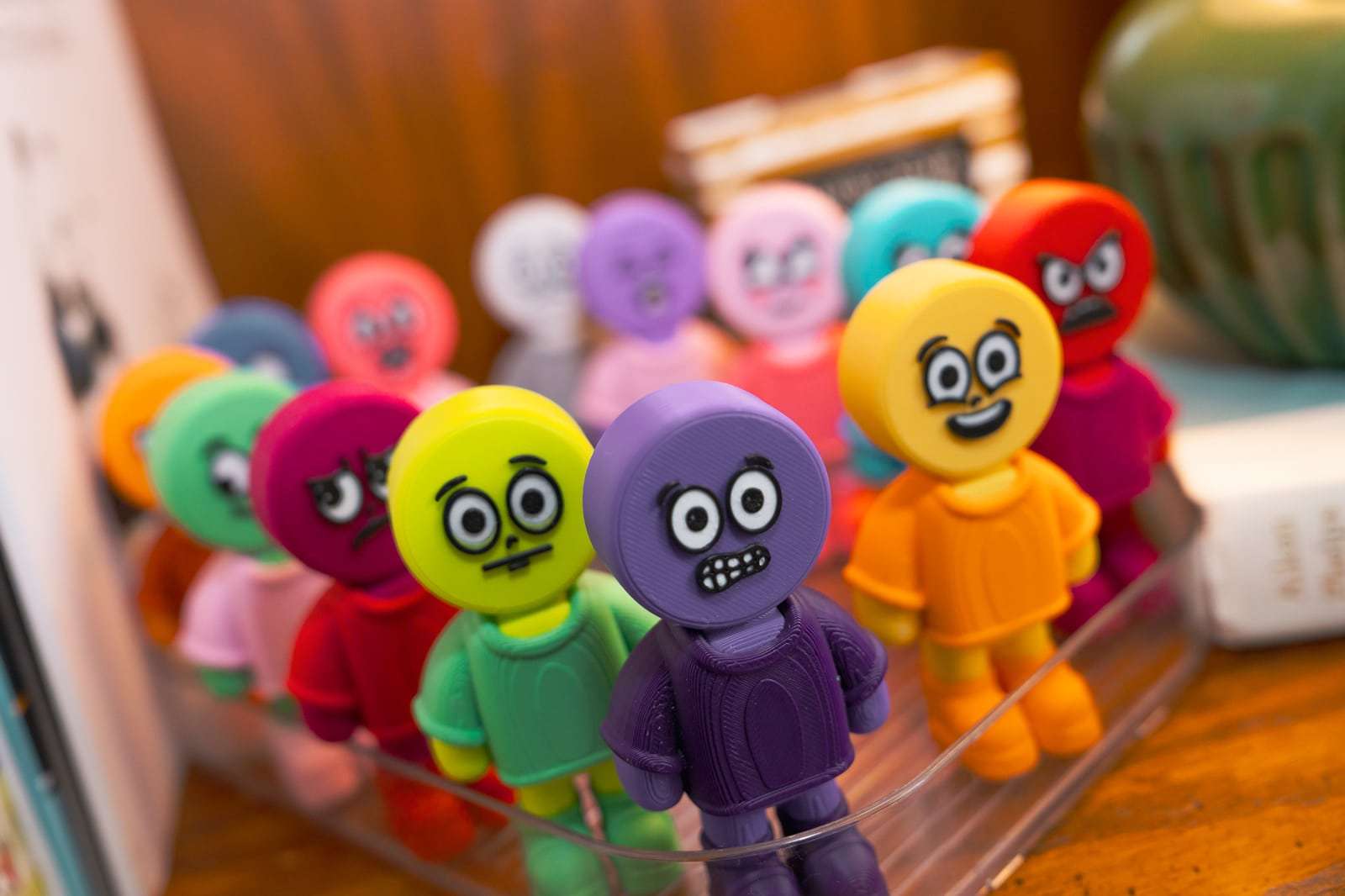
The overstimulated parent
The holidays are here and your nervous system is shot. There are approximately 4 million people, 3 million sounds, and 2 million decisions and a partridge in a pear tree that you’re suddenly responsible for. On top of your normal day to day responsibilities (like work and keeping your children alive) you’re now in charge of managing:
Christmas lists, Christmas trees, Christmas stockings, Christmas plans, Christmas dinner, Christmas breakfast. Christmas Eve, Christmas programs, Christmas shopping, Christmas pictures, Christmas cards, Christmas pajamas, Christmas break, Christmas budget, Christmas presents, Christmas wrapping, Christmas decorations, Christmas fun, Christmas mess… and then there’s the elf.
Choice A: You don’t change anything.
You do what you’ve always done and end up staying dysregulated until late January. You develop a twitch in your eye and you snap far more easily and often than you’d be comfortable admitting. You’re not sleeping and you feel like a failure when you accidentally burn the cinnamon rolls on Christmas morning. You put it all together, but manage to feel completely disconnected from the final ‘production’ of Christmas. You swear you’ll do it differently next year.
Choice B: You have gained enough awareness to see that holiday demands are making things worse.
In an effort to prevent the overwhelm you feel, you call off the holidays all together and decidedly wipe your hands of any traditions or extra activities that require anything of you. You hole up and don’t answer text messages or phone calls. When asked, you tell your mother-in-law that you are packing your family up and going far away from here on a cruise ship, so, no, you won’t be able to make it to the Christmas Eve dinner this year.
Choice C: You decide that in order to make it through the holidays without losing your ever-loving mind, you’re going to need some support.
You read through the Texarkana Counseling Collective website and decide that now is as good a time as ever to learn how to find some balance and manage the stress of it all before yet another holiday season leaves you in a funk. You book an appointment. You start seeing your counselor and when things start feeling overwhelming, you are met with a wave of relief. Simply knowing you have an appointment coming up where you will get to unload it is enough to get you by. You learn about your nervous system and work with your counselor to find balance again.
The overwhelmed trauma survivor
You get the text about coming home for Thanksgiving and the mere thought of it is enough to send your system into survival for the rest of the week. Walking into holiday family dynamics doesn’t just stress you out—your nervous system reacts as if you are still that trapped kid who has to keep everyone else happy to stay safe. There is more dread than eager anticipation and Christmas feels like an impossible escape room.
Choice A: You don’t change anything.
You do what you’ve always done and end up staying dysregulated until late January. You don’t feel well leading up to going home and the closer you get, the more upset your stomach feels. By the time you arrive, you have to go lay down and spend the next 24 hours between the bed and the bathroom. You’ve not been sleeping for weeks and when you do, you’re having nightmares. You startle at every small sound. You push through and dissociate through the entire holiday. You simultaneously feel everything and nothing all at once.
Choice B: You have gained enough awareness to know that being around your family is more than you can take.
In an effort to prevent the overwhelm you feel, you call off the holidays all together and decidedly wipe your hands of any people, places, or things that take you back to your childhood. You hole up and don’t answer text messages or phone calls. You stay in bed and don’t have to be concerned about putting on the performance of seeming happy to see everyone. Unfortunately, even though you reduced the chances of the direct triggers, your nervous system is still a wreck. You still feel sick and you still spend the entire season ‘checked out’.
Choice C: You decide that you’re ready to figure out how to manage all of the giant responses to holidays and family without completely shutting down.
You’ve told the story a million times, but you wonder if there is more that can be done to help fix the ways the story is still affecting you. You check out the Team page on the Texarkana Counseling Collective website and decide to reach out. You arrive for your first appointment and learn that the responses you are having are symptoms of a nervous system that is stuck in survival mode. Your counselor knows how to help and you realize you’re in the right place. For the first time in a long time, there is a sense of hope in the month of December.
The grief-stricken
The loss has been more than you can manage, but you’re trying to hold it together. It’s your first (or maybe your 5th, or 15th) holiday season since the world fell apart. Against all your ration and reasoning, though, it’s continued to keep spinning for everyone else. You’d rather skip right through to February than to face how different things are than how they were—than how you always envisioned they would be. You show up and give your best smile, but the emptiness is all consuming.
Choice A: You don’t change anything.
You do what you’ve always done and end up staying dysregulated until late January. The last few months of the year feel like being hit by a freight train, but there’s nothing you can do about it. You show up and feel simultaneously enraged and relieved at everyone living life as if your loss doesn’t exist. Your heart physically aches. Your body is tired. You find yourself crying more than you know what to do with. Yet, you smile for pictures and say yes to the invites, even though they feel like pity. You feel like you’re standing on a teetering edge ready to give way at any minute.
Choice B: You have gained enough awareness to know that grief has left an undeniable mark on your life and that the holidays make it feel unbearable.
You decide to shut yourself in. You wrap yourself in a warm blanket and alternate between tears, completely dissociating, and attempting to find ways to numb or distract from the ways it hurts. You say no to every invitation you receive and don’t show your face until the winter starts thawing out.
Choice C: You reason that there must be a way to not have to carry the weight of this insurmountable grief on your own.
You heard about a new counseling office in town and found yourself skimming the Specialties page on the Texarkana Counseling Collective website and wonder if Brainspotting and Somatic Experiencing intensive could be helpful for you. You call for a free 15 minute consultation and talk directly to a counselor who seems kind and understanding. You book an appointment and suddenly get the sense that you’re not alone.
The lonely and disconnected
You can only keep yourself so busy. The loneliness grows into a physical ache when faced with the seemingly undeniable ‘togetherness’ of the rest of the world. Everyone is full of holiday cheer and you are (unsuccessfully) holding back tears watching “The Grinch”. While making small talk, others ask about your plans for the holidays. You’re vague and evasive and creatively make it sound like you’ll have somewhere to be.
Choice A: You don’t change anything.
You do what you’ve always done and end up with overwhelming sadness that far exceeds the holiday cheer on those Hallmark movies. The sadness is accompanied by tightness in your throat and a headache that you can’t seem to shake, adding insult to injury. You can’t even scroll social media because it hurts too much to see everyone else together.
Choice B: You realized that a large part of your disconnection is a choice.
So, even though it’s uncomfortable, you find a place to put yourself out there and plug yourself in. You’re not entirely alone anymore. There are physical people around you while you read a book at Local Habit, try out a new hobby at Stitching Sparrow, or join in a Yoga Class at Texarkana Yoga. It’s a nice reprieve and you don’t feel lonely so long as someone is actively with you, but when it’s over, you still find yourself crawling into bed at night feeling empty. Being alone feels like something that has happened to you, not something you’ve chosen. No matter how you end up filling your time, the holiday season drags by with its unforgiving unity and joy and the tension in your shoulders gets tighter and tighter.
Choice C: You reflect and realize the holidays make it louder, but you don’t know how to be alone, and it’s been that way since you were a kid.
Instead of suffering through another holiday season trying to pretend you don’t, you become curious about where it comes from. You find yourself looking on the Texarkana Counseling Collective Resources and Blog pages, and determine that you might have some experiences to unpack. You reach out and set up your first appointment. When you meet with your counselor, you feel seen and connected.
Whatever the ‘misadventure’.
Whether you relate to one, or none, or all four scenarios—chances are your nervous system is experiencing a lot this holiday season. It’s showing up as increased anxiety. A tightening in your chest. Explosive anger. The pit in your stomach that gets heavier with each day. Working harder. Working later. That secret desire to hide away deep in a cave until it’s all over. What if this season could be different? What if you were gentle with yourself?
Healing is the best investment.
We invite you to give yourself the gift of being seen.
Hope is here.
Healing is possible.